
The best thing about Heroquest is that it’s the box that started it all. Like many other middle-aged grognards, the legendary Heroquest was my first taste of tabletop gaming with miniatures (not counting Escape from Atlantis here), so when it was re-released with updated minis and artwork, the nostalgia was strong, and I grabbed a copy. With my band of heroes, I set off into the dungeon.
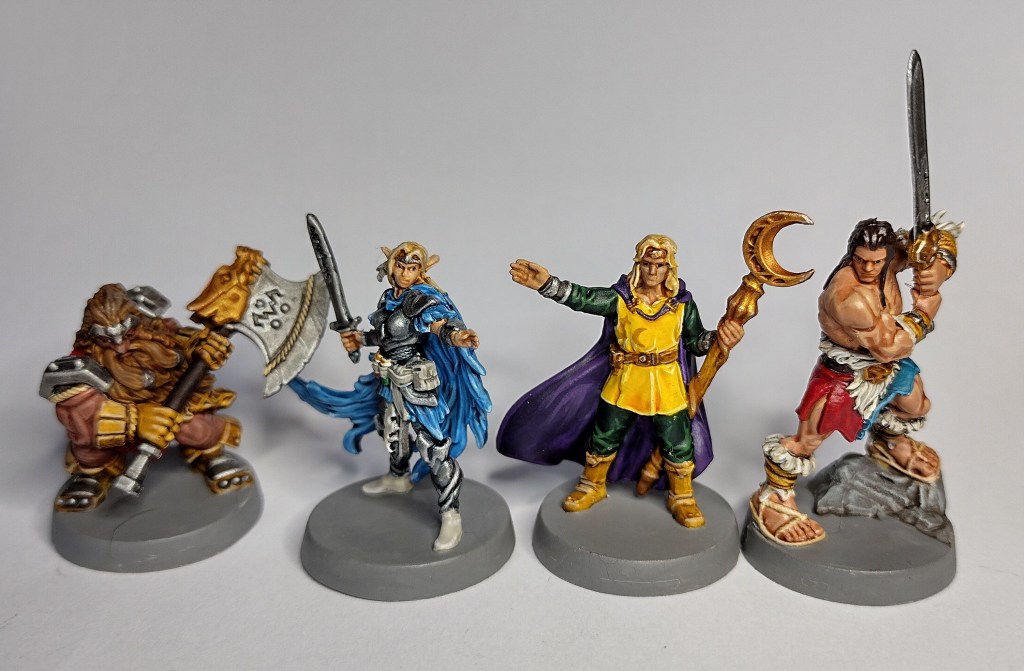
First impressions: the promotional photos don’t do the minis justice. They are much better in person than I thought from the adverts. Some sculpts have drifted in style from the original Citadel ones, and I particularly like the range of male and female sculpts – not something you often see.

The fish monsters which replace the old fimirs as wandering monsters feel a touch out of place (perhaps they’d be better in a themed expansion) but they offered a different painting challenge with all the coral and starfish and the like covering them. It was these reef-like flourishes that led me to choose a brighter, more pastel style palette rather than the drab colours of the angler fish they seem based on. It’s on these minis where you see the drawback of the type of plastic used – those spears/axes are prone to bending.
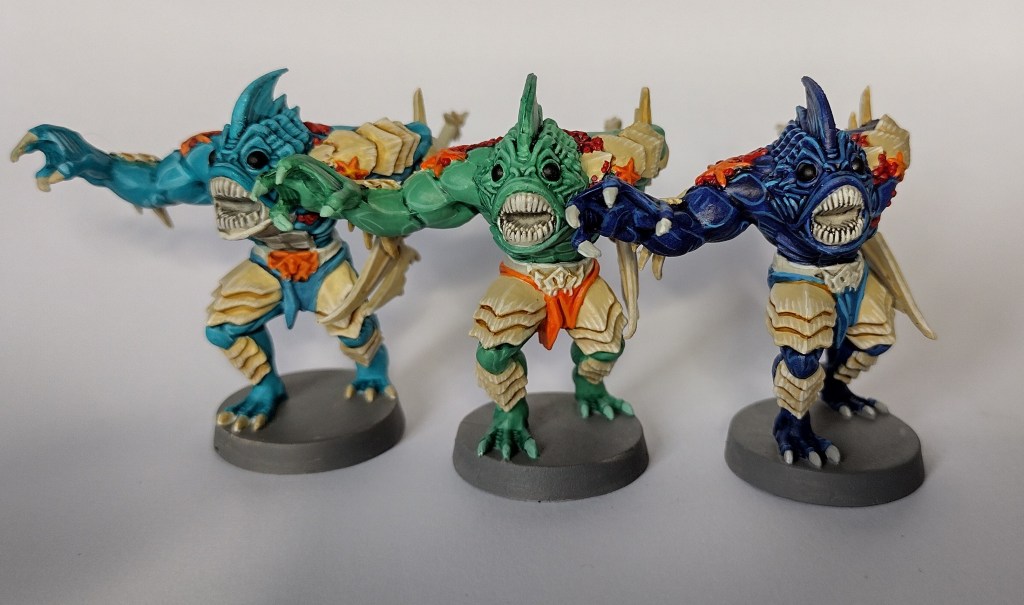
When sets have repeated sculpts, I like to have a way of differentiating them. Variety always helps keep the painting fresh and it helps a little on the table when a player can point to the ‘orc in blue’ rather than, ‘That orc. The one over there by the grey thing.’ I painted select parts of each repeated sculpt with a different colour which might also suggest different factions or tribes within the minions of the dungeon, adding a hint of extra narrative.
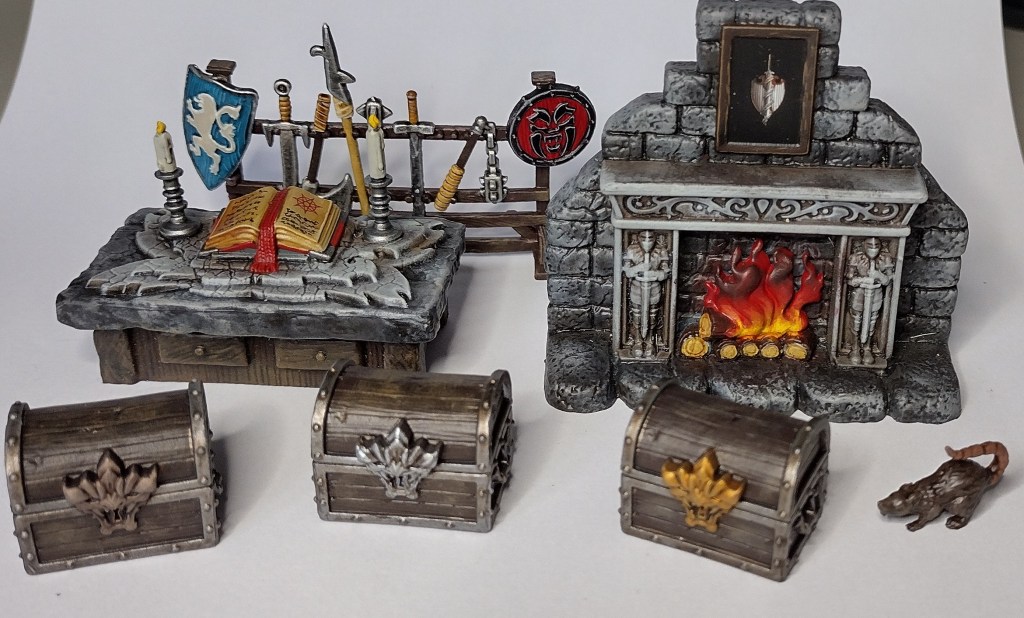
Being fully plastic, the furniture is a significant improvement over the original and is a whole lot more robust. While my old card treasure chests got squashed and frayed, these feel like they can handle the wear of regular play, provided they’re well varnished after painting. One handy trick I used on the furniture was to raid the Forge World Dark Angels transfer sheet and used a couple on the framed picture and spell book.
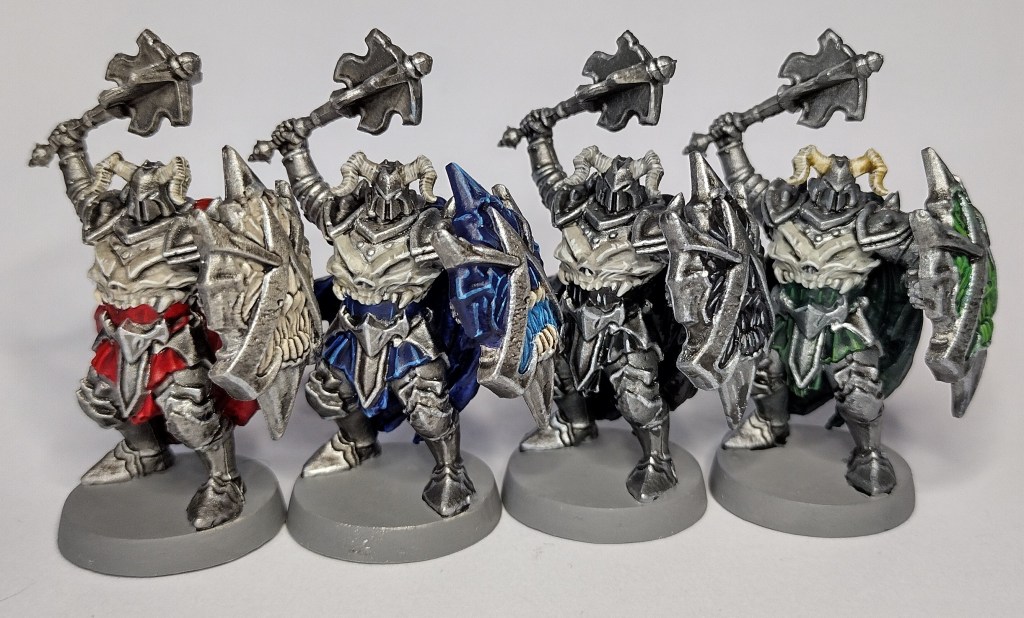
And what’s a dungeon crawler without villains? These are particularly good reimaginings of the original. Since gargoyles are supposedly just stone, this was the quickest to paint, if a little uninspired on my part. It’s just GW black primer, followed by successive drybrushed layers of Vallejo German Grey, Vallejo Dark Sea Grey, and GW Ulthuan Grey. The eyes were picked out in GW Mephiston Red. I do, however, like the idea of one of the heroes walking past a seemingly stone statue and its eyes lighting up, perhaps a growl escaping its rocky lips.
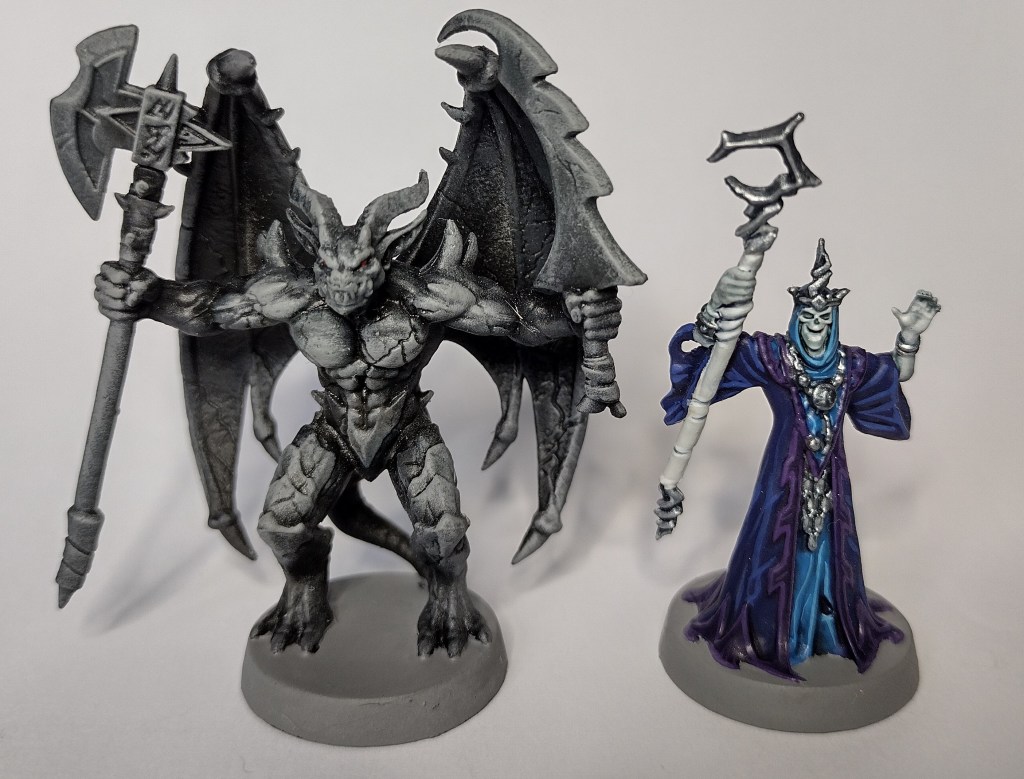
In all, the quality is way beyond what I expected, and this is also a quick set to paint for the sheer volume of contents. I made heavy use of GW contrast paints on the skulls and undead, particularly Skeleton Horde and Snakebite Leather, and Gryph Charger Grey for the fleshy undead. While there seems to be a lot of doors, you can make quick work of them with grey primer, GW Agrax Earthshade wash, a heavy drybrush of Vallejo Dark Sea Grey, and a light drybrush of GW Ulthuan Grey.
In terms of gameplay, it’s not changed much (if at all) from the original, and is still an absolute blast. Modern dungeon crawlers will likely be much slicker (I recommend Dungeon Saga) but for a hit of nostalgia, it’s hard to top Heroquest.
Want to support the blog? You can pick up my fantasy short read, Mysticarium, for your Kindle, or buy yourself some gaming goodies from Element Games and I’ll get a little kickback.
 Storm's Gate Creations